Marketing sites & landing pages
Server-rendered, fast on a mid-range Android phone, and structured so search engines can actually read them. Content editable without calling me.
Marketing sites, customer portals, admin dashboards and full SaaS products — built to load fast, rank well and stay maintainable after launch.
Most web projects do not fail on the front end. They fail because the data model was guessed at, the admin side was an afterthought, or nobody owned the deployment. I build the whole thing — schema, API, interface, deployment and monitoring — so there is one person accountable when something needs to change.
Stack depends on the job rather than fashion. Django when there is real domain logic, a back office and reporting to do. Next.js when the public surface needs to be fast and indexable. Often both, with a shared API in between.
Server-rendered, fast on a mid-range Android phone, and structured so search engines can actually read them. Content editable without calling me.
Role-based access, real reporting, exports, audit trails — the parts that turn a prototype into something a team can run a business on.
Multi-tenant data models, subscription and billing flows, onboarding, admin tooling and the usage analytics you need to price the thing.
REST and GraphQL APIs, payment gateways, SMS and email providers, third-party systems that were never designed to be integrated with.
Query profiling, caching, image pipelines and bundle work — measured against real field data, not a synthetic score.
Crawlable markup, canonical handling, sitemaps, structured data and page-speed work built in from the start instead of bolted on later.
A working session to pin down what the system has to do, who touches it and what already exists. You get a written scope, an architecture sketch and a realistic estimate before anything is committed to.
Data model, API surface and screens, agreed before the build. Designing against real data and real edge cases is what stops the rebuild three weeks in.
Working software every week against a staging URL you can open, rather than a big reveal at the end. Feedback lands while it is still cheap to act on.
Deployment, DNS and TLS, database migration, backups, monitoring and an handover walkthrough. The system goes live on infrastructure you own.
Optional retainer: security patches, feature work, performance passes and a person who already knows the codebase when something breaks.
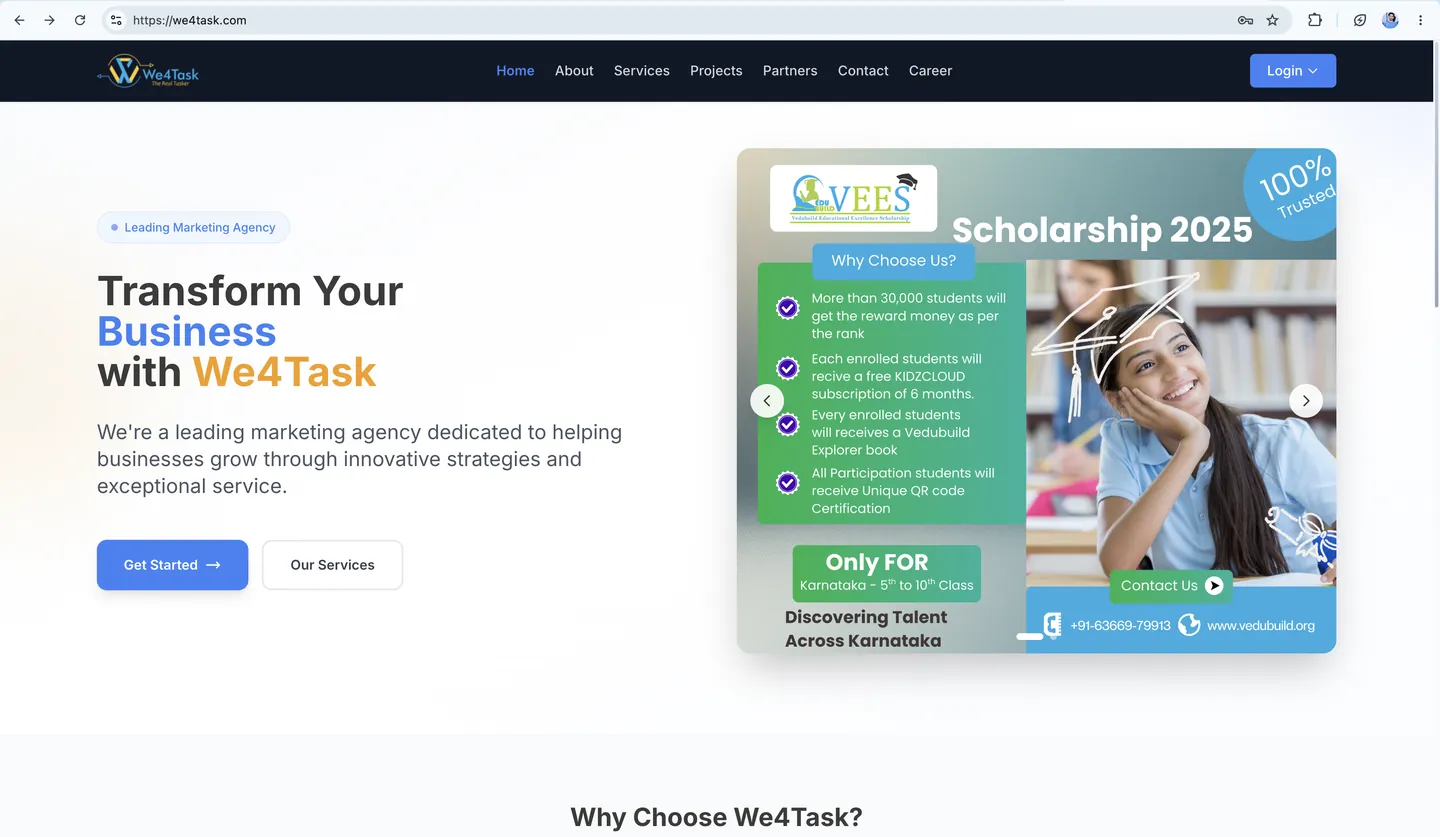
A customer relationship platform covering lead capture, pipeline stages, task assignment and team performance reporting.
Read the case study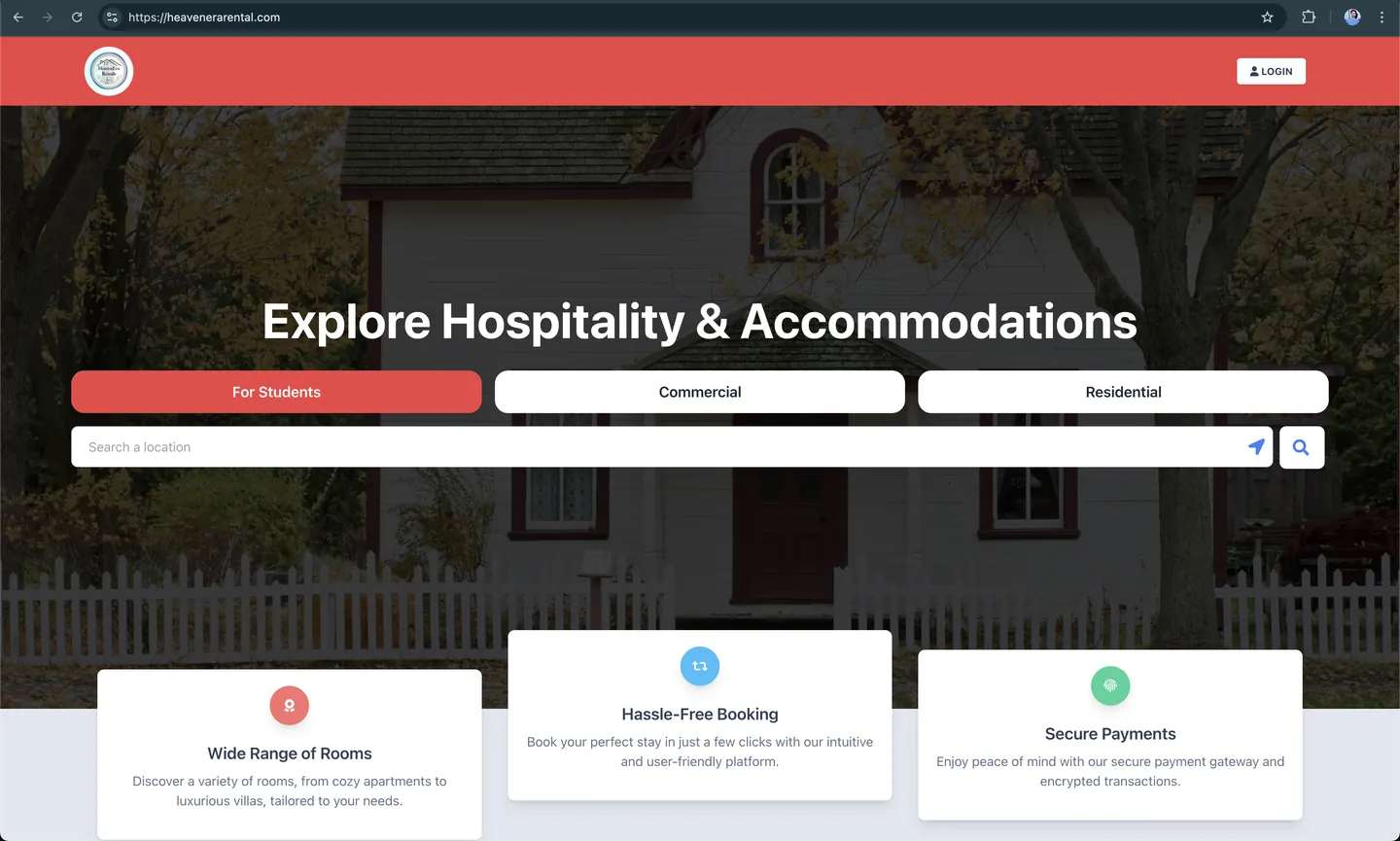
A property rental marketplace pairing a web application with a companion Android app — listings, search, bookings and payments.
Read the case studyIt depends almost entirely on how much of it is software rather than pages. A brochure site is a different order of work from a portal with logins, payments and reporting. Send me what you are trying to do and you get a fixed scope and a number, usually within a working day — not an hourly guess.
Yes. A good share of my work is taking over a project someone else started — auditing it, stabilising deployment, then shipping features. I will tell you honestly if a rewrite is cheaper than a rescue.
You do. The repository, the domain, the cloud account and the database are yours from day one. I work inside your accounts or hand everything over at launch — there is no hostage situation if you want to move on.
If the hard part is the back office (permissions, workflows, reporting, documents), Django will get you there faster. If the hard part is a fast, public, content-heavy front end, Next.js wins. Plenty of projects use Django for the API and Next.js for the public site.
Tell me what you are trying to ship. You get an approach, a timeline and a realistic estimate — usually within a working day.