Domain modelling
The part that decides whether the system survives year three. Sitting with the people doing the work, then modelling what actually happens — including the exceptions everyone forgot to mention.
Line-of-business systems — hospital management, school ERPs, CRM, billing, inventory, HR — modelled on how your team already works rather than how a product company decided you should.
Off-the-shelf software is cheaper right up to the point where your process does not fit it, and then you spend years working around it. Custom software is worth it when the process is the business: a hospital's patient flow, a school's fee structure, a distributor's pricing rules.
I have built these systems for organisations where downtime is not an abstraction — a hospital counter with a queue in front of it does not care why the page is slow. That shapes how I build: boring, observable, and recoverable.
The part that decides whether the system survives year three. Sitting with the people doing the work, then modelling what actually happens — including the exceptions everyone forgot to mention.
Real permission structures: departments, designations, approval chains, and an audit trail of who changed what and when.
Rate lists, concessions, part payments, stock movement, expiry tracking, reconciliation — the arithmetic that has to be right every single time.
Daily collection registers, MIS summaries, statutory formats, Excel and PDF exports that match the paper form the office already uses.
Importing years of spreadsheets or a legacy database, reconciled against your own totals before anyone is asked to trust the new system.
Phased department-by-department go-live, staff training sessions and a support line during the weeks when it actually matters.
A working session to pin down what the system has to do, who touches it and what already exists. You get a written scope, an architecture sketch and a realistic estimate before anything is committed to.
Data model, API surface and screens, agreed before the build. Designing against real data and real edge cases is what stops the rebuild three weeks in.
Working software every week against a staging URL you can open, rather than a big reveal at the end. Feedback lands while it is still cheap to act on.
Deployment, DNS and TLS, database migration, backups, monitoring and an handover walkthrough. The system goes live on infrastructure you own.
Optional retainer: security patches, feature work, performance passes and a person who already knows the codebase when something breaks.
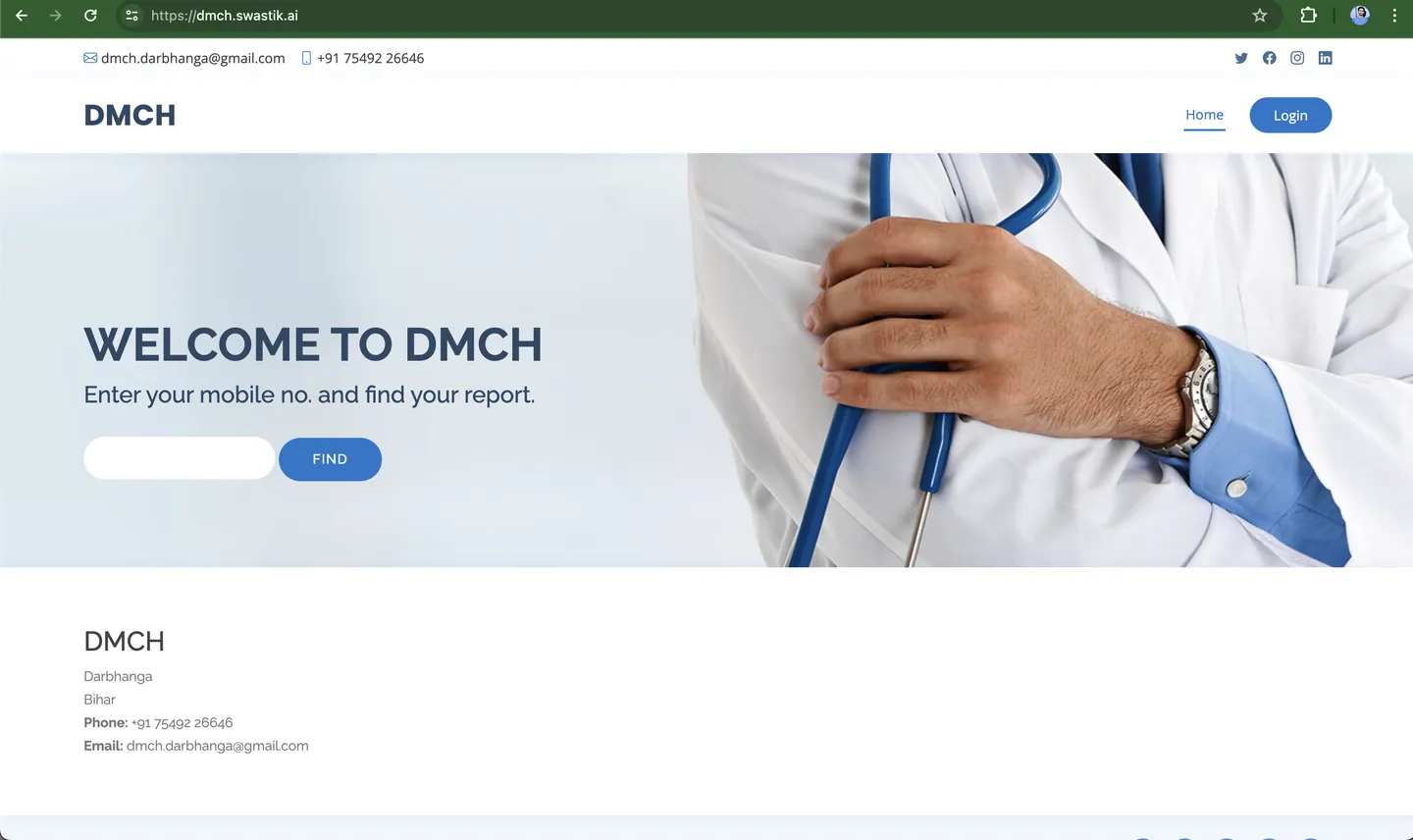
An end-to-end hospital management system covering patient registration, OPD and IPD workflows, billing, pharmacy, pathology, radiology, blood bank and medical records — running in production on a government medical college campus.
Read the case study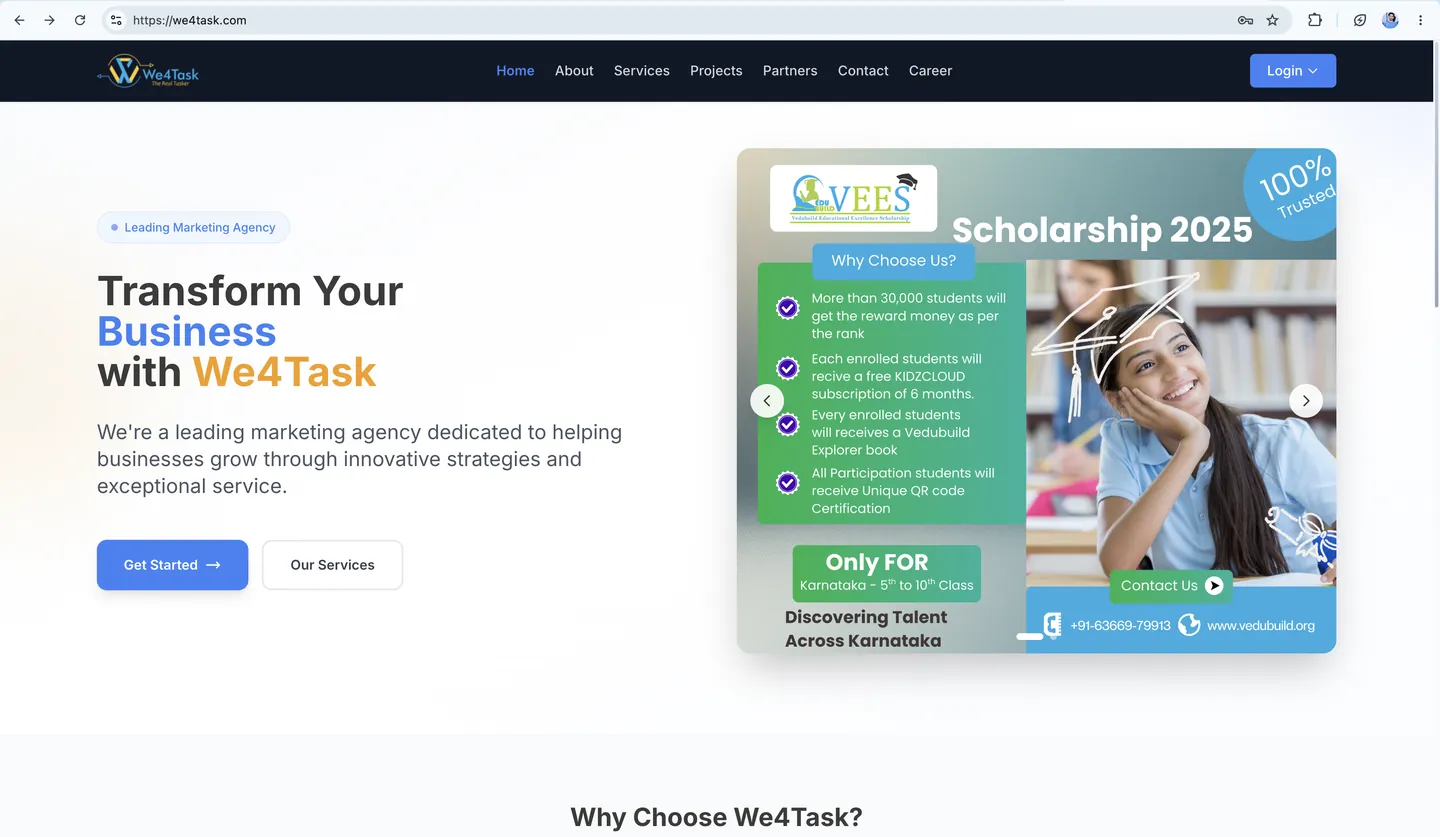
A customer relationship platform covering lead capture, pipeline stages, task assignment and team performance reporting.
Read the case studyA focused first module — registration and billing, say — is usually live in weeks, not quarters. The full system grows from there, department by department. Big-bang delivery of an entire ERP is how these projects die.
Yes. These systems run equally well on a VPS, a cloud instance or hardware inside your building. Where data residency or an intermittent internet connection is a factor, on-premise is often the right answer.
That is the point of custom software — it changes with you. Most clients keep a monthly retainer for exactly this, which is far cheaper than a change request process.
Usually yes — through an API where one exists, a database view or a scheduled file exchange where one does not. Biometric devices, lab analysers, payment gateways and accounting packages are all routine.
Tell me what you are trying to ship. You get an approach, a timeline and a realistic estimate — usually within a working day.