RAG assistants
Question answering grounded in your own documents, databases and media, with citations back to the source so answers can be checked.
Chat-with-your-data assistants, document and image intelligence, forecasting models and workflow automation — wired into the systems you already run.
The demo is the easy part. Getting an AI feature to production means dealing with the unglamorous questions: where do the documents live, who is allowed to see which ones, what happens when the model is confidently wrong, and what does this cost per query at ten times the volume.
I build the whole pipeline — ingestion, chunking, embeddings, retrieval, prompting, evaluation and the interface — and I am straightforward about where an LLM is the wrong tool and a database query or a rules engine would serve you better.
Question answering grounded in your own documents, databases and media, with citations back to the source so answers can be checked.
OCR and extraction pipelines that turn invoices, forms, reports and scanned records into structured data your systems can use.
Classification, routing, summarising and drafting inside existing workflows — triage that saves hours rather than a chatbot on a homepage.
Demand, load and revenue models built on your historical data, with honest error bars instead of a single confident number.
A test set and a scoring loop, so a prompt or model change is a measured decision rather than a vibe.
Caching, model routing, batching and token budgets — the difference between a pilot and something you can afford at scale.
A working session to pin down what the system has to do, who touches it and what already exists. You get a written scope, an architecture sketch and a realistic estimate before anything is committed to.
Data model, API surface and screens, agreed before the build. Designing against real data and real edge cases is what stops the rebuild three weeks in.
Working software every week against a staging URL you can open, rather than a big reveal at the end. Feedback lands while it is still cheap to act on.
Deployment, DNS and TLS, database migration, backups, monitoring and an handover walkthrough. The system goes live on infrastructure you own.
Optional retainer: security patches, feature work, performance passes and a person who already knows the codebase when something breaks.
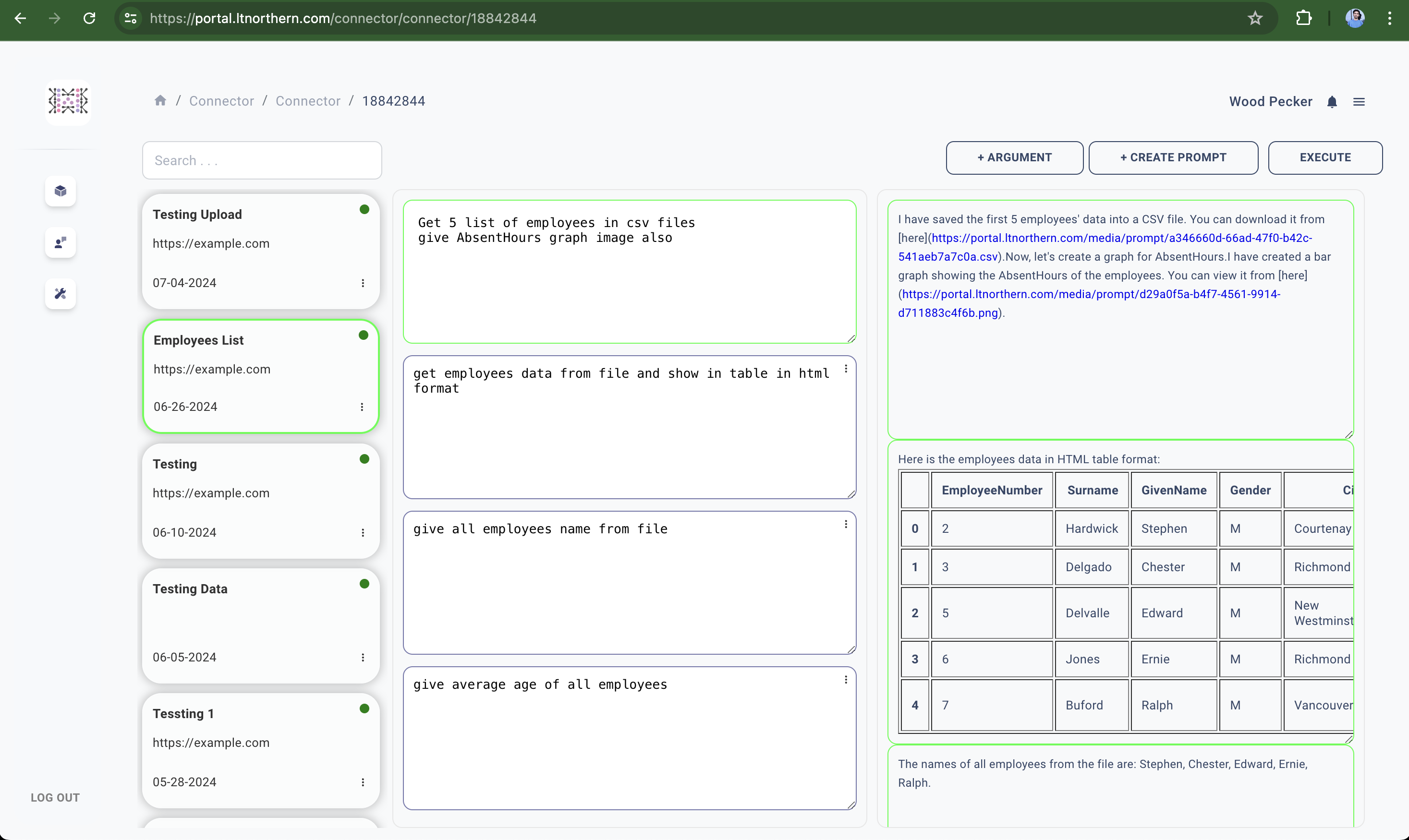
A retrieval-augmented assistant that answers natural-language questions across uploaded documents, connected SQL databases, images and video — with answers grounded in retrieved source material.
Read the case studyThat is exactly what a RAG system does. Your documents are indexed into a vector store, the relevant passages are retrieved for each question, and the model answers from those with citations. The documents are not used to train anyone's model.
Your call. Hosted models are cheaper and stronger; open-weight models running on your own hardware keep everything in-house. For regulated data I will usually recommend self-hosted, and design so the two are swappable.
Per-query cost is a function of model, context size and volume, and it is estimable before you commit. I model it during discovery so nobody is surprised by the first month's bill.
Retrieval grounding, citations for every claim, refusal when the context does not support an answer, and an evaluation set that catches regressions. You cannot reduce it to zero — you can make it visible and testable.
Tell me what you are trying to ship. You get an approach, a timeline and a realistic estimate — usually within a working day.